centilio
Centilio

Explore the products

A business OS.
Room to grow.

Start with one tool. Explore the wider suite as your needs grow.

Explore Centilio One ↗Product availability follows the catalogue.
FREE TEMPLATE / PERSONAL, FAMILY AND LEGAL

Affidavit of Residence (United States)

A sworn statement of where a person lives, since when and who lives there with them, for a school, bank or government office in the United States that asks for proof of address. The affiant signs in front of a notary public, who completes the jurat.

For the United States.

This page lists how to sign it in the United States. See how it is signed

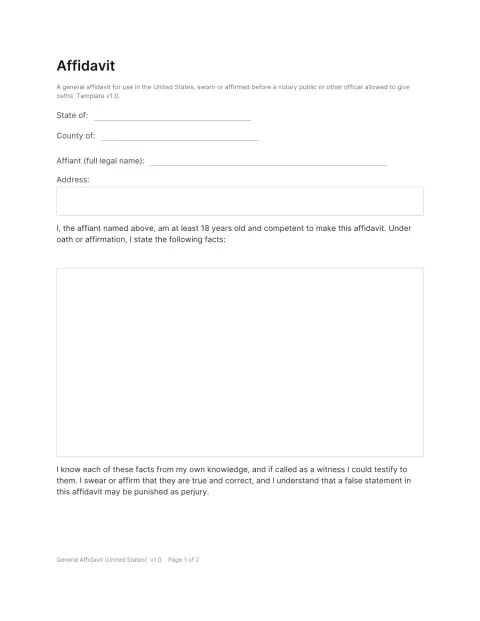
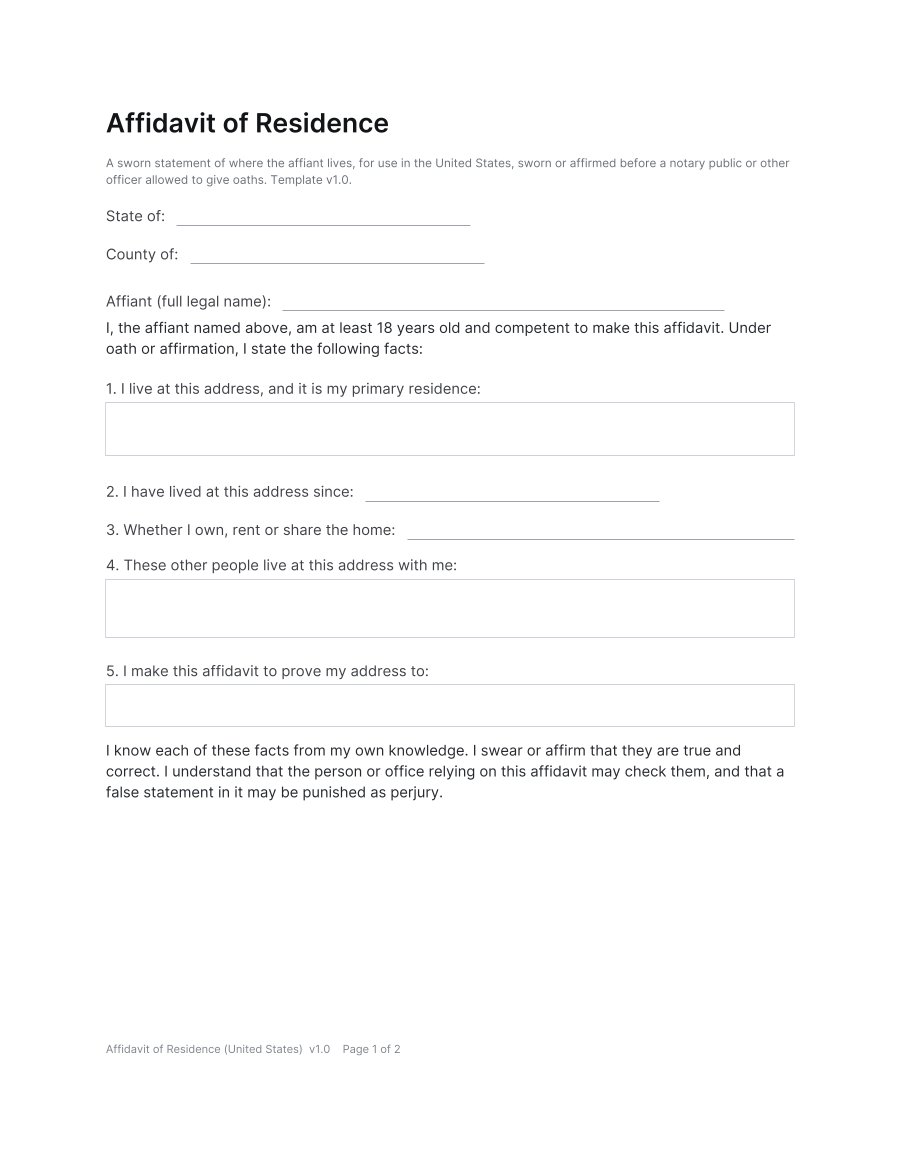
First page of the Affidavit of Residence (United States) template
PDF, 2 pages, 11 KB
BEFORE YOU START

What you will be asked

Have these details ready. The template needs them before anyone signs.

  • What is your full legal name?
  • What is the full address where you live, with any apartment number?
  • Since when have you lived there? A month and year is enough.
  • Do you own the home, rent it, or live there with family or friends?
  • Who else lives there with you, and how are they related to you? Say nobody if you live alone.Optional
  • Who is this affidavit for, such as a school, a bank or a government office, and what is it for?
  • In which state will you sign this in front of the notary?
  • In which county will you sign it?
THE PEOPLE

Who signs

Everyone the template names, and what each one does.

  • AffiantSigns
  • Notary public or other officerNotary
SIGNING RULES

How it is signed in the United States

The rules for an affidavit or sworn statement depend on where it is signed. Laws change, so check the sources before anyone signs.

United States

Print and sign in ink

Print it and sign it in ink. A notary or other authorized officer must take the signature.

Steps

  1. Print the affidavit and do not sign it yet.
  2. Take photo ID to a notary, or use an online notary where allowed.
  3. Swear or affirm and sign it in front of the notary.
  4. The notary completes the jurat and seal.

What the law asks for

E-signature
Only in some casesAn affidavit is sworn before a notary. It can be signed electronically only with an online notary where state law allows.
Witnesses
None
Notary
RequiredThe notary gives the oath and completes the jurat. For federal matters an unsworn declaration under penalty of perjury (28 U.S.C. 1746) can replace it.
Remote signing
Online notary allowedOnline notarization is in force in 42 states and DC (mid 2026).
Registration
Not needed
Stamp duty
Not needed

Sources

Checked October 25, 2026 against these sources.
QUESTIONS

Common questions

Answers from the signing rules on this page.

Can the affidavit of residence be signed electronically in the United States?

Only in some cases in the United States. An affidavit is sworn before a notary. It can be signed electronically only with an online notary where state law allows.

How many witnesses does the affidavit of residence need in the United States?

None. No witness is needed in the United States.

Does the affidavit of residence need a notary in the United States?

Yes. A notary or other authorized officer must take the signature. The notary gives the oath and completes the jurat. For federal matters an unsworn declaration under penalty of perjury (28 U.S.C. 1746) can replace it.

Does the affidavit of residence need to be registered in the United States?

No. It is not registered.

Is stamp duty due on the affidavit of residence in the United States?

No stamp duty is due.

Can the affidavit of residence be signed or witnessed remotely in the United States?

Yes. Online notarization is allowed. Online notarization is in force in 42 states and DC (mid 2026).

THE RIGHT TEMPLATE

Where it fits

For proving your own address in any US state. Not for a homeowner swearing that another family lives with them, and not where the school, bank or agency gives you its own residency form.

A CAREFUL CHECK

Before you rely on it

Original Centilio wording, not legal advice. An affidavit of residence for any US state, sworn or affirmed before a notary public or other officer the state allows to give oaths, who completes the jurat. Some states, such as California, want their own jurat wording, which the notary can attach. Schools, banks and agencies often also want documents, such as a lease, utility bill or tax bill, and many have their own residency form, so check what the office accepts. It does not cover a homeowner's affidavit that another family lives with them, or domicile for tax, voting or estate purposes. In federal matters an unsworn declaration under 28 U.S.C. 1746 may be used instead, and some states allow the same. See a lawyer when residency decides tuition, taxes or a court case.