United States
Print and sign in inkPrint it and sign it in ink. A notary or other authorized officer must take the signature. It must then be registered.
Steps
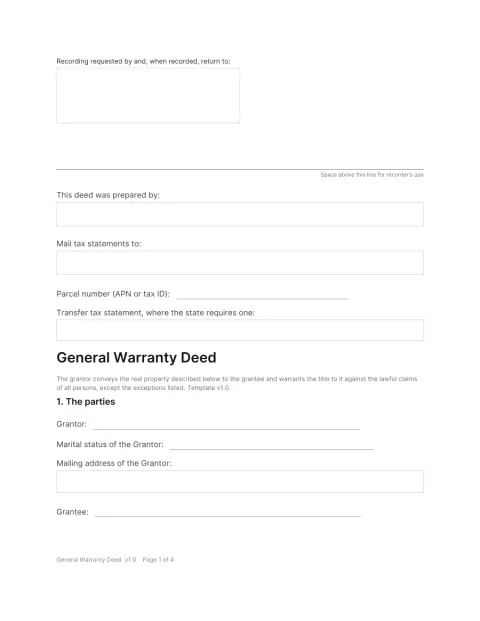
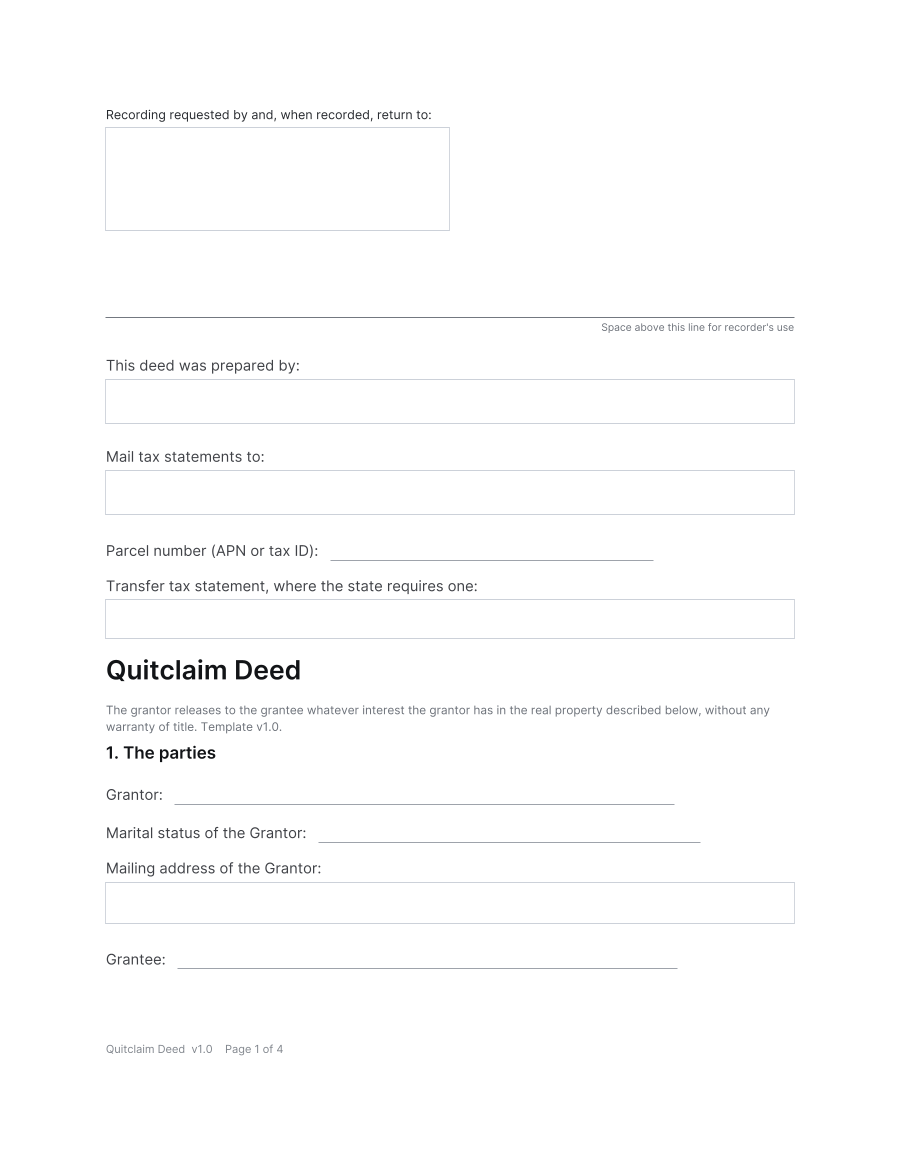
- Print the deed on US Letter paper with one inch margins.
- The grantor signs before a notary, and before witnesses where the state requires.
- File any transfer tax or change of ownership form the state asks for.
- Record the deed with the county where the property is.
- The recorded deed is mailed to the return address on page 1.
What the law asks for
- E-signature
- Only in some casesMany counties accept electronic recording of a deed notarised online, through a recording submitter.
- Witnesses
- NoneMost states need no witness.
- Notary
- RequiredThe grantor's signature is acknowledged before a notary so the deed can be recorded.
- Remote signing
- Online notary allowedOnline notarization is in force in 42 states and DC (mid 2026).
- Registration
- RequiredRecord the deed with the county recorder or clerk where the property is, with its fee and any transfer tax form.
- Stamp duty
- Not neededSome states charge a transfer tax or ask for a transfer form when the deed is recorded.
Where the rules differ
| State | How it is signed | E-signature | Witnesses | Notary | Registration | Stamp duty |
|---|---|---|---|---|---|---|
| Florida | Print and sign in ink | Only in some cases | Two | Required | Required | Required |
| South Carolina | Print and sign in ink | Not accepted | Two | Required | Required | Required |
South Carolina has no remote online notarization law in force. | ||||||
Sources
- Texas Property Code chapter 12, recording of instruments
- Proof: is remote online notarization legal in all states (updated July 2026)
Checked October 25, 2026 against these sources.